Close your eyes for a moment. You climb a narrow staircase in Vedado, past someone's laundry drying on an iron railing, past the sound of a novela drifting from a television behind a closed door. You emerge onto a rooftop where a table is set for two - white cloth, a candle, a sprig of something wild. Below, Havana sprawls in every direction, crumbling and magnificent. A woman brings you something cold to drink. You didn't pick this restaurant from a guidebook. A taxi driver told you about it. You're eating dinner inside someone's home. This is the paladar.
The Word Paladar
The word rolls off the tongue in a way that feels both foreign and inevitable - pah-lah-DAR. In Spanish, paladar simply means "palate," the roof of the mouth, the seat of taste. But in Cuba, it means something far more layered. It means a kitchen with a story. It means food with stakes. It means dinner as an act of quiet defiance.
The word came to Cuba by a stranger route than you might expect: a Brazilian soap opera. In the early 1990s, the telenovela Vale Tudo ("Anything Goes") was broadcast across Latin America. In it, a determined woman named Raquel ran a small, scrappy restaurant she called "Paladar." Cubans, hungry in more ways than one, watched it devotedly. When families across the island began quietly cooking for neighbors and strangers in exchange for pesos, they borrowed the name from the screen. It fit. The word stuck.
In Cuba, a paladar is not just a restaurant. It is a declaration - that a family can feed itself, and feed others, on its own terms.
- Sofia Mendoza, Cuban food writerBorn from Necessity: 1993
To understand the paladar, you must first understand what Cubans call el Perúodo Especial en Tiempo de Paz - the Special Period in Time of Peace. When the Soviet Union collapsed between 1989 and 1991, Cuba lost its primary benefactor overnight. Soviet subsidies worth an estimated $5-6 billion per year evaporated. Oil shipments dropped by 90%. Factories shuttered. The economy contracted by more than a third. Havana, Once a city of relative plenty by Caribbean standards, became a city of profound scarcity.
Blackouts lasted sixteen hours a day. Bicycles replaced buses. Oxen replaced tractors in the fields. And food - the basic, irreducible matter of survival - became something you improvised around rather than simply purchased. The government ration book, the libreta, had always supplemented Cuban diets; now it was the only thing standing between many families and genuine hunger.
In this crucible, something extraordinary happened. Families began cooking. Not just for themselves, but for anyone who would pay. A woman with a gas stove and a neighbor's garden might offer ropa vieja and rice for ten pesos to a friend, then to a stranger, then to a foreigner whose USD convertible currency was worth twenty-five times the national peso. Word spread. People came. Tables appeared on patios. Extra chairs were borrowed from neighbors. Underground restaurants bloomed in apartments across Havana, Trinidad, and Santiago de Cuba.
These were, technically, illegal. But in the calculus of a government watching its people starve, they were also necessary.
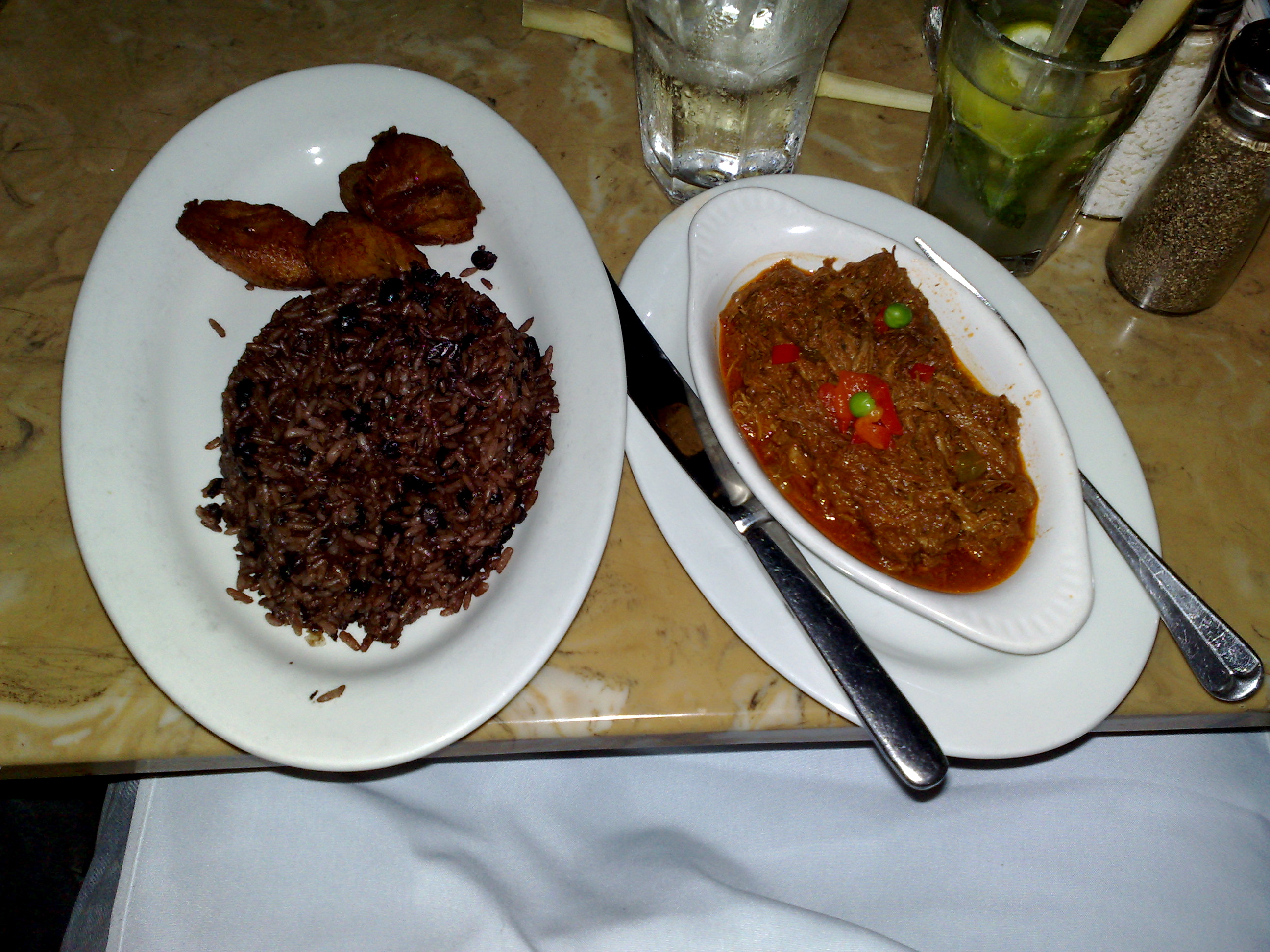
Modern paladares have evolved far beyond survival cooking - today's best rival any fine dining establishment in the Caribbean.
Legalization: A New Era
In September 1993, Raél Castro - then Defense Minister and increasingly the man running day-to-day Cuba - signed a series of economic reforms into law. Among them: Cubans were permitted to operate private restaurants in their homes. The paladar was born, legally, at last.
The rules were strict. They had to be. The revolution had spent three decades dismantling private enterprise; it was not about to simply let it back in without controls. The regulations read almost like restrictions designed to prevent success rather than enable it:
📜 The 1993 Paladar Rules
- Maximum of 12 seats - no larger gatherings allowed
- Only family members could work in the restaurant - no hired employees
- No beef - cattle were state property; slaughter without permission was a criminal offense
- No lobster, no shrimp - seafood was reserved for tourist-facing state enterprises
- Restaurants must operate from the owner's private residence
- Heavy licensing fees regardless of income
- No advertising beyond a small sign at the door
And yet, Cuban families made it work. If the law said twelve seats, some set out eleven and squeezed in a thirteenth when no inspector was looking. If beef was forbidden, cooks became magicians with pork, chicken, and vegetables - discovering that necessity, again and again, was the mother of exceptional Cuban food. If you couldn't hire employees, your cousin came to help, and your aunt, and your neighbor who wasn't exactly family but whom everyone called prima anyway.
The early paladares were humble. Plastic chairs. Shared bathrooms. Handwritten menus that changed with whatever the market had that morning. But they were alive in a way that the stiff, state-run restaurants - with their indifferent service and institutional food - could never quite manage. In a paladar, someone cared what you ate.
The Special Period Begins
Soviet collapse triggers Cuba's worst economic crisis. Food scarcity forces families to improvise.
First Legalization
Raél Castro legalizes private family restaurants. Strict rules apply: 12 seats max, family-only staff, no beef or lobster.
The Reform Revolution
Sweeping reforms lift seat limits, allow hired workers, and expand the scope of private enterprise dramatically.
Cuba's Culinary Renaissance
World-class paladares attract international food press. La Guarida and others achieve global recognition.
The 2010 Revolution
Fidel Castro's formal retirement in 2008 and Raél's full assumption of the presidency ushered in a period of cautious but real economic reform. The changes accelerated sharply in 2010 and 2011, when the government announced that it would dramatically expand Cuba's private sector.
For paladares, the transformations were seismic. The twelve-seat limit - that stubborn cap that had constrained Cuban restaurant owners for seventeen years - was lifted entirely. Restaurateurs could now hire workers who weren't relatives. They could operate on a larger scale, accept credit cards (at least in theory), and even import goods through licensed intermediaries. The list of forbidden foods shrank. Ambition, long suppressed, began to unfurl.
In Vedado, a former diplomat turned his colonial mansion into a forty-seat supper club with a sommelier and a wood-burning pizza oven. In Old Havana, a woman who had been feeding twelve tourists a night from her second-floor apartment expanded into the floor below, then the floor above, then rented the neighboring unit. Paladares that had whispered now began to speak aloud. Some of them roared.
The investment that poured in - from Cuban-Americans sending remittances, from European partners, from successful restaurateurs reinvesting profits - transformed the scene of Havana dining in under a decade. By the mid-2010s, the city had paladares with wine cellars, celebrity chef consultants, and waiting lists that stretched weeks.
Today's Paladares
Walk into La Guarida on Concordia Street in Centro Habana today and you will find a crumbling Beaux-Arts building, a spiraling marble staircase, and one of the most talked-about restaurants in the Caribbean. Decorated with art from Cuban painters, lit by chandeliers salvaged from dismantled theaters, it has hosted Mick Jagger, the Obamas, Jay-Z and Beyoncé. It appeared in the 1994 Cuban film Fresa y Chocolate ("Strawberry and Chocolate"), which was nominated for an Academy Award. La Guarida is, by any reasonable metric, a world-class restaurant. And it is still, at its heart, a paladar.
But for every La Guarida, there are a hundred smaller ones - the Vedado rooftop with eight tables and a view that no hotel can match; the Trinidad courtyard where the cook's grandmother taught her to make masitas de puerco and she has never deviated from the recipe; the Havana apartment where lunch costs four dollars and the mojito comes in a chipped glass and is, somehow, perfect.
Today's paladares run the full spectrum from street-level working-class kitchens to sophisticated dining rooms with printed menus, wine programs curated from Spain and Chile, and tasting menus that change with the season. Cuban chefs who once had nowhere to express their creativity now have platforms - and audiences of international food travelers increasingly making Havana a culinary destination rather than merely a historical one.
The best of them are, without question, producing some of the most exciting food in Latin America.
The dishes these families have perfected over generations are the heart of Cuba's culinary heritage - a cuisine built on sofrito, patience, and love.
Paladar vs. State Restaurant
The difference between a paladar and a state-run restaurant in Cuba is not simply a matter of ownership. It is a matter of soul.
Cuba's government restaurants - the ones attached to hotels, the institutional cafeterias, the tourist-facing establishments that were the only option for decades - have an aura of collective amnesia about them. The food is often adequate. The service frequently ranges from indifferent to hostile, not because Cuban people are unfriendly, but because there is no material incentive to care. A waiter in a state restaurant earns roughly the same whether the guests leave satisfied or furious.
| Factor | Paladar | State Restaurant |
|---|---|---|
| Ownership | Private family | Cuban government |
| Menu | Creative, seasonal, personal | Standardized, institutional |
| Service | Warm, invested, personal | Variable, often indifferent |
| Food Quality | Generally superior | Adequate to poor |
| Value | Excellent | Often overpriced for quality |
| Experience | Intimate, memorable | Transactional, generic |
| Economic impact | Directly supports Cuban families | Supports state apparatus |
In a paladar, every dish comes with stakes attached. The cook's reputation rests on your plate. Their livelihood depends on you leaving satisfied and telling your taxi driver, who will tell the next tourist, who will climb those stairs and be handed a cold drink and a handwritten menu. The care is embedded in the economics of the thing.
This is not to romanticize poverty or pretend that Cuba's private restaurateurs don't face enormous challenges - the difficulty of sourcing ingredients, the constant regulatory shifts, the tax burden, the dual-currency confusion that has distorted Cuban commerce for decades. Running a paladar in Cuba requires resourcefulness that would humble most restaurateurs anywhere in the world. Before you visit, read about Cuba's unique visa and entry requirements so there are no surprises.
But the food. The food is almost always better.
Ready to Experience a Paladar?
Browse our curated list of Havana's finest private restaurants - from rooftop supper clubs to hidden courtyard gems.
Explore Top Paladares in Havana ?